Showing posts with label interference patterns. Show all posts

Sunday, October 17, 2010

Global Coherence


A direct link to the above video is at http://www.youtube.com/watch?v=FzGBDBEx_pI
Not long ago the amazingly energetic Dr. Mark Filippi of somaspace.org invited me to attend the 2010 Coherence Conference, which took place at the University of Bridgeport in October 2010. Unfortunately, my schedule didn't allow me to participate, but there were four basic questions Dr. Mark asked everyone to consider prior to the conference, and I'd like to share my responses with you now. This conference focused on the burgeoning field of "Health 2.0", and brought together a wide range of speakers from various disciplines to discuss the importance of coherence as it relates to people's well-being. Since I'm not a health professional, I'm sure there would have been a lot of eye-opening discussions for me, but I'm also sure that my own approach would have added some new ideas to the discussion.

I'm particularly interested in the idea that our reality is shifting as people become more and more connected to each other: definitely a coherence-related concept! Here's the questions that Dr. Mark, as chair of the event, asked all participants to respond to:


1. Define coherence in your terms
Here's how I first learned about the concept of coherence: our reality is constructed through constructive interference from a fifth dimensional probability space, which contains a wave function which can be thought of as the constantly evolving map of possible pasts and futures that connect each of us to our current "now". Those past and future paths are "coherent" with our current now, while the pasts and futures of the universe that are logically/causally incompatible are "decoherent".

Coherence, then, connects us to the multiverse as per Everett's Many Worlds Interpretation of Quantum Mechanics. Speaking philosophically, coherence as a goal is finding ways for each of us to better connect to the preferred versions of the universe that already exist within the underlying patterns of timelessness which, to avoid confusion with the multiple definitions of the word "multiverse", I've come to prefer to refer to as the "omniverse".

My project, Imagining the Tenth Dimension, has been an ongoing exploration of how we fit into these underlying patterns. I recently posted a video to YouTube called "Strength of Gravity, Speed of Light" which shows one example of how my project is about trying to find the common meeting ground between physics and philosophy, between science and spirituality.


A recent blog entry which goes even further out on a limb with these ideas is called "Love and Gravity". In that one I look at what would more commonly be called "new age" phrases and relate them to my approach to visualizing the extra spatial dimensions our reality comes from. Those phrases are:

The universe loves you.

Your body's natural inclination is to want to heal, to want to thrive.

There are forces outside of our reality which are trying to move us towards a better future.


2. What are the key applications of your definition?
Understanding how each of us is at the center of our own unique version of the universe gives us a way of understanding our connectedness to the reality we are observing, and our connectedness to others we are interacting with as that reality is being observed. We each have more power than twentieth century science has traditionally taught us to believe, and the new science of epigenetics is a prime example of that. Who would have believed twenty years ago that studies could prove that changes in diet, lifestyle, and attitude can change which genes are expressed, and even influence what genes we pass on to our offspring? A YouTube video I posted at the end of August called "Placebos Becoming More Effective?" relates to this discussion.


3. What do you see as the major impact of your application within your field?

I am a generalist, interested in exploring the common meeting ground between ancient spirituality and modern science. I'm always careful to point out that I'm not a physicist and I'm not pretending to be one, but my visual approach to understanding the ten spatial dimensions (plus one of time, but since I agree with the many physicists who say that ultimately "time is an illusion" I prefer not to count it as a dimension) that our reality comes from has fired the imaginations of millions of people around the world.


4. What do you see as the major impact of your application outside your field?

"Outside my field"? Since I'm a generalist, that term's a bit hard to define. For persons who insist that spirituality has no place in science, or religious fundamentalists who say that science is delusion, or hard determinists who say free will is an illusion, my project will not likely convince them to change the conclusions they've already reached. Other than that it's difficult to pin down exactly what the phrase "outside my field" would mean, since the main goal of my project is to find ways to be as inclusive as possible in discussing where our reality comes from, and the significance of our individual roles as participants in that process.

For more about how my idea of our reality coming from a fifth dimensional probability space is receiving more mainstream consideration this year, please watch my video for "The 5th Dimensional Camera Project".


I've titled this entry "Global Coherence". Here's a link to a description of "The Global Coherence Initiative", something that Jack Canfield (famed author of the enormously popular Chicken Soup for the Soul series) describes as "perhaps the greatest experiment in the history of the world". Is the world changing for the better as more and more people become connected to each other, embracing the possibilities of shared intention? Check out the link if you'd like to know more.

And as I always like to say, enjoy the journey!

Rob Bryanton

Next: Thinking Bigger

Monday, September 27, 2010

Complexity from Simplicity

Last time, in Cymatics, Gravity and Light, we returned to the idea that complex patterns (like a universe such as ours) could arise from comparatively simple repeating structures: a recurring theme for this project.

In Slices of Reality, we looked at an amazing iPhone picture that I love so much I made it the background for my twitter page. Then, in Imagining the Omniverse - Addendum we looked at one of the amazing "Scanimation" books created by Rufus Butler Seder. And in "More Slices of Reality" we looked at an animation created using the same technique, by a youtube user calling themselves brusspup. Here's another video from brusspup, who creates these animations from scratch in Photoshop. Enjoy the journey!

Rob


A direct link to the above video is at http://www.youtube.com/watch?v=lvvcRdwNhGM

Next: 10-10-10: Look Before You Leap

Friday, September 24, 2010

Cymatics, Gravity, and Light


A direct link to the above video is at http://www.youtube.com/watch?v=9eTrsIOGIZo


A direct link to the above video is at http://www.youtube.com/watch?v=iC0XUTsKQwU

The above recently launched YouTube video is for a blog entry published in March called Strength of Gravity, Speed of Light. You'll notice an animated graphic in the background of the second half of this video, which demonstrates concepts we touched very briefly on in a blog entry from February called More Slices of Reality: Chladni Plates and Cymatics. Here's the Cymatics video which part of the above video's background is based upon:


A direct link to the above video is at http://www.youtube.com/watch?v=1iXY2BE1S8Q

Last time, in Light Has No Speed, we looked at a presentation made by physicist and author Peter Russell. In it, he showed how, from light's perspective, it's not part of our space-time:

"From light's point of view there is no space, no time, no mass. Light does not exist within the world of spacetime and matter."
In Strength of Gravity, Speed of Light, we looked at a new theory by Dr. Erik Verlinde of the University of Amsterdam, who suggests that gravity is something that naturally arises from our position within the multiverse landscape, in the same way that the quality of "liquidity" naturally arises from water. Many theoretical physicists have said that gravity is the only force which exerts itself across the extra dimensions, and Dr. Verlinde's theory suggests a reason for this to be so.

Rolling these concepts from Dr. Verlinde and Dr. Russell together presents us with further ways of connecting to the ideas discussed in my above video. If both gravity and light are "outside" of our spacetime, then our reality is produced by the interference patterns created as a result of gravity and light pushing against one another. Our beautiful, chaotic, fractal world is like a much more highly detailed version of the Cymatics patterns we're looking at above: our universe is the shadow of an extra-dimensional hologram, created (as all holograms are) through constructive interference to reveal the reality each of us are observing right here, and right now.

How cool is that?

Enjoy the journey,

Rob Bryanton

Next: Complexity from Simplicity

Thursday, September 16, 2010

Constructive Interference and the Quantum Observer


A direct link to the above video is at http://www.youtube.com/watch?v=5nhcUQ27X1E

The above recently posted youtube video is for a blog entry from March of this year called Holograms and Quanta. It returns to this familiar graphic from my book and animation:

This illustration points to some of the most central ideas to this project.

  1. Our reality is not continuous, it's divided into planck-length frames
  2. Holograms are created by interference patterns. Modern holographic universe theories suggest that our 4D reality is the shadow of a 5D hologram.
  3. The term "constructive interference" is very useful when talking about how consciousness participates in the creation of the universe each of us is observing (this is one of the conclusions I reach near the end of my book).
Here's how I summed this up in Imagining the Tenth Dimension: a new way of thinking about time and space:
Does the interference pattern we see in the ripple tank control its own results? Clearly, it does not.

But the lovely thing about the term “constructive interference” is that it gives us a second way to think about this concept: we can view consciousness as the moiré pattern that springs unbidden from the interaction of two patterns that exist in the ninth dimension and below. Or we can imagine that the pattern that we are experiencing as reality and mind is actively selecting its own pattern as it chooses to cause the meme system and physical system to interact: in other words, the pattern is choosing to “constructively interfere” as it creates its reality. This offers us the possibility that there are parts of our own consciousness that would be actively trying to select a path which, in the biggest picture of all, has the potential to move us towards the version of our universe that lasts the longest and flourishes the most.

Experimental Confirmation for String Theory Finally On Its Way?

Here's a link to a great article about a new theory from a team of scientists led by Professor Mike Duff from the Imperial College of London: the article is called "Scientists Say They Can Now Test String Theory". It talks about a new paper Professor Duff was the lead author on which shows a cross-connection between quantum entanglement and string theory models that describe black holes. He is suggesting that new experiments his team are now proposing could help to confirm or deny string theory. Check it out!

We'll continue this discussion of how the non-continuous nature of our spacetime is so important to understanding how constructive interference creates our observed reality with an upcoming entry called Cymatics, Gravity and Light. But first, we're going to take a little side trip to discuss some ideas from physicist Peter Russell in Light Has No Speed.

Till then, enjoy the journey!

Rob Bryanton

Sunday, February 21, 2010

More Slices of Reality

Two weeks ago, in Dancing on the Timeline, we looked at some fanciful ways of imagining what our spacetime reality might look like from "outside" the tiny planck-length window of our arrow of time. And a while back, in Imagining the Omniverse: Addendum we looked at some of the other visualizations that are out there to help us imagine how the interplay between the granular nature of spacetime and extra-dimensional waveforms might result in the reality we see around us. In one of my earliest blog entries, Death?, and again in Magnets and Souls, we looked at moire patterns and a fascinating physics demonstration people like to call the "corn starch monster": two examples of what happens when one pattern and another pattern interact, and the complex, fluid, and sometimes even life-like patterns that can result as a result of constructive interference. Here's a video I came across not long ago which shows a really creative use of constructive interference:


A direct link to the above video is at http://www.youtube.com/watch?v=T5xtRdLOopU

There's a series of kids' books out that use the same technique pictured in the above movie, if you watch the following video for Imagining the Omniverse: Addendum from about the 1:15 mark you'll see a demonstration of one of those books.


A direct link to the above video is at http://www.youtube.com/watch?v=_MptYznkv14

More and more theories of reality are agreeing that our universe is defined by the non-continuous nature of our 4D spacetime. This is what I was talking about in Slices of Reality, here's the video for that entry again:

A direct link to the above video is at http://www.youtube.com/watch?v=nheaNclVe2Y

Holograms are created by interference patterns, as we said in The Holographic Universe, and some theories very specifically tell us that our non-continuous 4D spacetime universe is the shadow of a fifth dimensional hologram. Again, it's important to keep in mind that holograms need an interference pattern to come into view, and the 5th dimensional hologram that defines the wave function of probabilistic outcomes for our universe comes into view for us as a result of the one-planck-length-after-another nature of our spacetime. In You are the Point, I recently suggested that this non-continuous nature of our spacetime is akin to a rapidly vibrating strobe light, creating interesting patterns in ways very similar to the interactions we see with the thin black lines in the above "optical illusion" video, or with the seemingly life-like motions created by the rapid oscillations applied to a corn starch solution - they reveal the nature of underlying extra-dimensional structures.

Ernst Chladni was a German physicist and musician, who published a book in 1787 demonstrating his discovery of the nodal patterns that can become visible when fine particles such as sand are sprinkled on a vibrating metal plate. In Chladni's time, he would use a violin bow to cause his "Chladni Plate" to vibrate. In modern times this is usually done with a signal generator hooked to a speaker mounted under the plate, and the interesting figures that emerge are sometimes called "Chladni Patterns":

A direct link to the above video is at http://www.youtube.com/watch?v=6wmFAwqQB0g

In 1967, Hans Jenny published a book called Cymatics: the Study of Wave Phenomena which developed Chladni's ideas much further. Keeping in mind that quantum mechanics tells us that the underlying mode for matter is that it is a wave until it's observed, Cymatics has far-reaching applications. The following two videos relate to Cymatics, plus in both of these videos our old friend the corn starch monster makes an appearance once again.


A direct link to the above video is at http://www.youtube.com/watch?v=WaYvYysQvBU


A direct link to the above video is at http://www.youtube.com/watch?v=4shodbQMcmM

As I mentioned, it seems the holographic nature of our reality is being talked about more and more these days. New Scientist magazine recently published a story called "The Entropy Force: a New Direction for Gravity" which describes an exciting new approach from string theorist Erik Verlinde of the University of Amsterdam, the Netherlands. Dr. Verlinde bases his ideas upon the information equals reality paradigm that I'm always promoting, and invokes the underlying holographic nature of our spacetime as part of a new explanation for gravity.

We'll talk about interference patterns and gravity some more next week in an entry called Holograms and Quanta.

Enjoy the journey,

Rob

PS - You should follow me on twitter here.

Next: 3 Books That Could Change Your Life

Tuesday, April 28, 2009

Polls Archive 35 - Do We Come From a 5D Hologram?


A direct linke to the above video is at http://www.youtube.com/watch?v=-YG3qo4BJmk

Poll Question 35 - "Our 4D universe comes from a 5D hologram." Poll ended March 10 2009. 71% agreed, while the remainder disagreed.

This poll question connects to two blog entries published in January. The first, "Slices of Reality" talked about interference patterns and provided a fascinating visualization of just such a pattern that resulted from the unique way an iPhone takes its pictures. The blog entry that followed, "The Holographic Universe", talks about the exciting new evidence from the GEO600 project that appears to confirm one of the central ideas my project is based upon: our reality is not continuous. Rather, it is divided into planck-unit sized "frames" of space-time. Some people look at this and presume it only refers to the planck length, 10 to the minus 35 meters, but that's only a measurement of 3D space. A 4D "frame" of space-time has length, width, depth, and duration, and its size in all four dimensions is determined by Planck's Constant. Understanding this immediately gives us a way to understand the string theory idea that our experience of the fifth dimension and above is "curled up at the planck length" - it's because of the granular nature of space-time, which means we can only view the fifth dimension through these planck unit sized "grains" of spacetime which occur one after another on our 4D line of time, giving us the illusion of the continuously existing reality we see around us.

There's much more to discuss about all this, please read my entry The Holographic Universe for more. Or, here are the "vlog" versions of those two entries, and these are part of a collection of over 200 videos I've posted over at my youtube channel.

Slices of Reality:

A direct link to the above video is at http://www.youtube.com/watch?v=nheaNclVe2Y

The Holographic Universe:


A direct link to the above video is at http://www.youtube.com/watch?v=hMLVjFrtq6Q

Enjoy the journey, one frame at a time!

Rob Bryanton

Next: WWF Augmented Reality

Friday, January 23, 2009

Slices of Reality


A direct link to the above video is at http://www.youtube.com/watch?v=nheaNclVe2Y


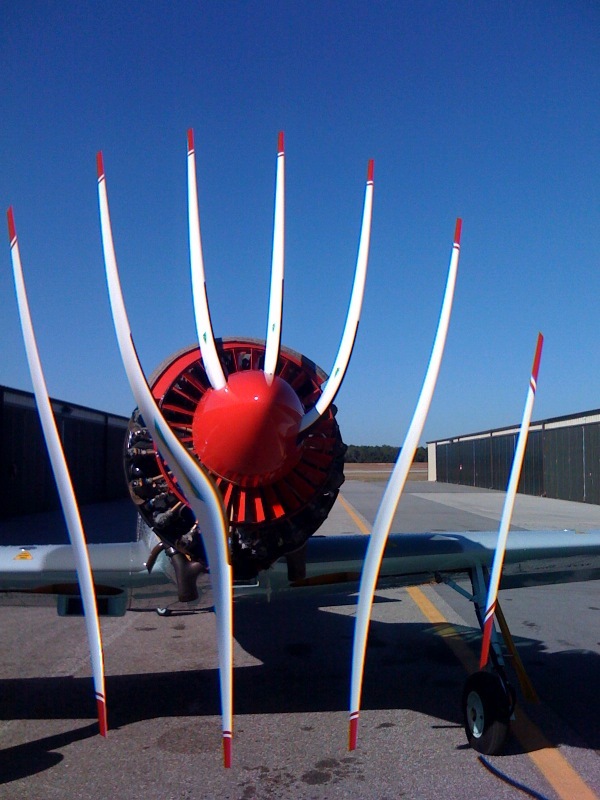
This stunningly surreal shot of an airplane's spinning propeller was taken using an iPhone, which has the unique property of working more like a scanner than a traditional still camera: on an iPhone the image is assembled using sequential vertical "slices" moving from the left side to the right side of the image, a very rapid process that in most cases would give you a completely normal-looking photograph, but in situations like these it gives you something quite extraordinary. Clearly, this is the tip of the iceberg, and now that that this has been noticed we should soon be seeing lots of artistic shots like this one of various fast moving objects. Would a hummingbird's wings become deconstructed in a similar way? I have no idea what will work and what won't (and since I don't own an iPhone I'm not going to find out any time soon), but I was immediately drawn to this picture in the context of my project.

One of the basic ideas from Imagining the Tenth Dimension is that reality is not continuous: what we think of as our "line of time" is actually being assembled one planck length after another from a wave function, a probability space, which I propose exists within the fifth dimension and above. Thinking about waves and patterns from the extra dimensions which manifest themselves down here in spacetime is something we've talked about many times, in entries like Hypercubes and Plato's Cave and The Flipbook Universe: but trying to visualize how interlocking oscillations and patterns in the higher dimensions could manifest as separate particles, physical objects, and living creatures within the physical reality we're part of is still not an easy thing to do. Can you see that the strange shapes representing the spinning propeller in this photograph are an interference pattern, created by the "slices" of the camera's picture-taking process interacting with the rotational spin of the prop? In the same way, the "slices", or quanta, of our line of time are an important part of the processes that create our reality.

Moiré Patterns

The above video was posted on YouTube by alecmartindeleon, you can find it at http://ca.youtube.com/watch?v=n_2kSdj6V0w

In the concluding chapter of my book, I focused on constructive interference patterns as a way to imagine how our reality and the mysterious spark of life are akin to the dancing moiré patterns that happen when repeating patterns of information are interacting with each other - and the important concept I've spoken about before, "that which ceases to change ceases to exist" is tied to that idea as well. Thinking of "life" as something that springs into being through the interference patterns of memes (selection patterns from the extra dimensions) and spimes (space-time objects, which would include genes and the DNA helix in the case of life on Earth) is one of the more "out there" conclusions I've reached with this project, and I haven't spent much time talking about that idea in these blogs because it's quite a stretch for most people to visualize how such a thing could be possible.

More metaphysical/spiritual ideas of imagining an extra dimensional meme-space that connects us all together and yet gives us each our unique experience as individuals is also something I've talked about, in entries like I Know You, You Know Me, and You are Me and We are All Together. But a picture can speak a thousand words, and I think this amazing iPhone picture gives us a very useful visualization tool for all of the above ideas.

I would like to give credit where it's due, but...

The above iPhone picture has been making the rounds for the last week or so, but I'm not sure who created the original shot. I found it at http://www.globalnerdy.com/2009/01/13/cheap-camera-interesting-shot/#, and in that blog entry the picture's creator is not named but a link is provided to monkeydyne.com, which currently only shows a drawing of a windup toy monkey (perhaps links have been temporarily pulled down because of a sudden and expensive spike in traffic to the site?). I would love to know more about this picture and how it was taken, just how fast the propeller was spinning, etc., but this is all I have to go on at the moment.

In any case, I hope you enjoyed looking at this picture while thinking about interference patterns and the nature of reality.

Enjoy the journey,

Rob Bryanton

Next: The Holographic Universe

Thursday, August 23, 2007

Constructive Interference


In chapter eleven of Imagining the Tenth Dimension I talk about three interlocking systems that spring from the tenth dimension as I have portrayed it: those three systems are the physical universe, the spiritual universe of memes and beliefs, and the "constructive interference pattern" between those two systems which we see as life. I propose that life can be thought of as any force or pattern that appears to be interested in "what happens next".

Let's talk about constructive interference. When one wave or pattern interacts with another, there are two kinds of interference. Destructive interference happens when two waves cancel each other out, while constructive interference happens when two waves reinforce each other. We can see both kinds of interference in the ripple tank many of us know from high school physics classes, and constructive interference is what creates the moving shapes we can see in a moiré pattern as one grid moves against another.

Constructive interference is an especially useful phrase in this instance, because we can bend its meaning slightly to imply that life can choose to constructively interfere with the other two systems, or it can just be a moiré pattern that we see as the interaction between the other two systems. What I am proposing is that if there is no interaction between the physical realm and the realm of memes, there is no life. That doesn’t mean that those first two systems cease to exist, but without an observer to collapse their wavefunctions from their indeterminate state, it means that they remain as potential states only… and this indeterminacy applies just as much to world of spimes (objects that can be tracked in spacetime) as it does to world of memes (ideas that can be tracked in spacetime).

One of my favorite concepts which applies to this line of thinking is “that which ceases to change ceases to exist”. Here's some of what I say in the book about that idea:


When the brain processes input from the auditory nerve, it tends to reject any continuous noises which do not change–like, for instance, the noise of the air molecules in the room banging into each other, or the sound of an air conditioner. In other words, for our consciousness, the noises (or smells, or continuous aches and pains, and so on) which cease to change, will cease to exist because the brain stops them from being considered for processing. When we listen back to the tape recording, we are hearing what’s really in the room, without the phase reversed noise cancellation the brain uses to remove those continuous noises. Now, when the internal mechanisms of the ear are damaged, usually through exposure to excessive sound levels, we end up with an imbalance, where the brain is correcting for frequencies that are no longer coming in. This manifests itself as tinnitus, or “ringing of the ears”. It turns out that the ringing we hear is not from the ears, but from the brain itself, as it attempts to cancel out particular frequencies that are no longer coming in from the auditory nerve.


Likewise, a recent article in Scientific American talks about ongoing research that has been done on human visual perception. In the past, this particular experiment was done with a display attached to a person's eyeball with a suction cup - and what the experiment showed is that people become blind when their eye motion didn't change what they were seeing. Nowadays they do the same experiment with computer tracking of eyeball movement, and a computer generated display that moves around in exact sync with the person's eyes. So why, in normal circumstances do we not become blind just from looking in one direction? Because we compensate for this problem by wiggling our eyeballs around slightly to continually change what we are are seeing, with microscopic motion called microsaccades.

If our reality is being created by a series of dots (or "quanta" one planck length apart from each other on the fourth-dimensional line that we perceive of as “time”, then we see a way to imagine that we are already looking at an interference pattern between those slices and the quantum waves of indeterminacy contained with the multiverse and the higher dimensions. But life adds an additional complexity to this image: because the process of being interested in "what happens next" can move at very many different speeds and with many different patterns. In the most extreme parts of our world – volcanic vents in the ocean floor, ice in the Antarctic, scientists are finding life. That life, with a limited eco-system and small amounts of energy to draw from, would be much more slow-moving and simple than, say, your average warm-blooded mammal. But all forms of life share one thing in common – a desire to continue. This is what separates mere chemical reactions from life.

Our eyes and our brains are conditioned to recognize life, and many people who have witnessed the death of a beloved animal or family member will tell you that they knew exactly when the spirit had left the body. It’s interesting to think of death then, as being the moment when the force that was interacting with the physical world to create that life stops interacting, and the life appears to cease to exist. This also gives us a way to understand how profound sickness or disease could cause most of the meme-system that represented a particular personality to leave the body well before the body ceases to be alive.

Why, some might ask, do I feel the need to place life in its own realm - why can't it just be an aspect of physical reality, or an aspect of the spiritual reality? This all relates back to timelessness. Physicists tell us that time is an illusion, and my way of imagining reality agrees with that conclusion. If, within the fabric that our reality is created from, everything has already happened, then this must be true for life as well as it is true for our physical reality. Which leads us to this strange conclusion: if the illusion of time is just one way of viewing the indeterminate data that exists within the underlying structure of our reality, then that must equally be true for the constructive interference pattern that we think of as life. Which means the ancient mystics have had it right all along. To paraphrase Einstein: not just time, but life itself is an illusion... albeit a persistent one.

Enjoy the journey,

Rob Bryanton

Sunday, April 15, 2007

Gravity and Light

In an ideal world, every interface should be able to be boiled down to a simple interplay between only two currently available choices, so that even a very limited input device (one operated by a physically challenged person, for instance) can navigate, right from the very first yes or no. Finding what the most basic choice is can be the hardest part of designing an interface!

Some people are not comfortable with the idea of "Thoughts Become Things", because it feels so counter-intuitive to the observed physicality we see around us. Is everything just vibrations and constructive interference patterns? Is a person's consciousness and our physical reality all just a reflection of a complex vibration across the dimensions? In the model proposed in "Imagining the Tenth Dimension", we begin by talking about the geometric concept of a point. Later in the book, it becomes clear that this "starting point" can be in any dimension we choose to imagine it (if it's in the third dimension it could be at position x,y,z; in the seventh dimension it could be at position t,u,v,w,x,y,z; and so on). If the tenth dimension encompasses all aspects of indeterminacy, then no matter which of the nine dimensions you choose to place that first "point", its position collapses out a particular reality from the multiverse... in other words, it becomes the first yes/no, and by its selection it is already reducing the available options to a certain subset of the indeterminate whole.

I would argue that no matter what dimension you place that first point, the first thing that point defines is the value (or range of values) for gravity in the universe (or universes) that you are selecting. Physicists tell us that gravity is the only force that travels across all dimensions. Therefore, even if the information is irrelevant to the discussion at hand, any reality (ours included) can't have an indeterminate value for gravity. What do I mean when I say this information could be irrelevant? Well, for instance, if I define a set of co-ordinates in the third dimension to create a cube, I can determine the volume of that cube. Whether that cube exists in our universe or in some other universe with a different value for gravity, I can still determine its volume. But as soon as I am imagining a cube that physically exists, I am defining it as being in a real three-dimensional universe, which means that even though I am only assigning the x,y,z co-ordinates and values for this cube, its existence as a real object necessitates that it also be part of an implied subset drawn from the wave of quantum indeterminacy: a reality defined from the ninth down to the first dimensions. If gravity is everywhere, then any subset of reality must be limiting the available choices for gravity.

What if the point I'm thinking about is in the seventh through ninth dimensions? Then we can imagine our point, because it is of indeterminate size, as encompassing multiple values for gravity. Whether it would actually be possible to create a three-dimensional reality from a seventh-dimensional point encompassing a range of values for gravity is a science fiction question, a challenge for the imagination.

The second thing that can be locked in is the value for how close one point can be to the next in the reality we are choosing to examine. For our universe, this value is known as the planck length, and its value tells us why nothing in our universe can travel faster than the speed of light, and why our reality breaks down into quantum indeterminacy when we try to examine things that are closer to each other than the planck length - it's because "time" is not continuous, it is granular. Time gives us this illusion of being a continuous fourth-dimensional line, but it's actually being created by a series of three-dimensional points each representing our universe in a particular state-space, and each of those points is one planck length away from the next. While it's entirely possible to imagine a universe constructed from points that are closer together or further apart than the one we live in, they would be part of some other subset of the multiverse.

But how can something as complex as physical reality be boiled down to just a vibration across the dimensions? Here's an analogy: think about a sound wave. Using the interplay of only two factors, amplitude and frequency, we can create something as simple as a sine wave, or as harmonically complex as the human voice, or as dynamic as a thunderstorm. In the digital realm, the degree of accuracy with which a sound can be represented is reflected by the number of bits used to represent the amplitude, and the sampling rate used to represent the frequency. Once the bits and sampling rate are high enough (and any audio geek will tell you these numbers should therefore be much higher than the 16 bits and 44.1K sample rate of a CD), any sound imaginable can be properly represented.

The speed of light, then, shows us the "sample rate" for our universe, which determines what frequencies can be properly represented in the waveform of our physical reality. As we approach the speed of light or the planck length, reality breaks down, it can no longer be properly represented.

Consciousness, in its own way, can be boiled down to an interplay between gravity and light, but consciousness is not confined to the physical world, so those words can easily be used metaphorically. Still, an idea can have a certain gravity (or lack thereof), and a frequency (or mix of multiple frequencies) which, like the amplitude and frequency of any other waveform, allows us to create any idea imaginable. In Imagining the Tenth Dimension, I argue that the clouds of memes and spirit that exist across time are part of what we take on to become a unique personality, and because those factors are not rooted in the limited physical realm, they can be transmitted across generations, and also be responsible for simultaneous inspiration or the sudden ascendency of new memes. The biggest-picture-of-all memes which have existed since the beginning of our universe have such a long waveform that they could easily be represented by a much lower sample rate - but since time is really an illusion, what we are really talking about here is just another way of viewing our slice of the multiverse.

Enjoy the journey,

Rob

P.S. - the new "Utopia" issue of What Is Enlightenment? magazine is now hitting the newsstands. Please flip to page 26 and read the fantastic article by Senior Associate Editor Tom Huston about the Imagining the Tenth Dimension project.


The link to this video can be found at http://www.youtube.com/watch?v=Kfe_3bEH-jE


A link to this video can be found at http://www.youtube.com/watch?v=b7r2NJop0cs


A link to this video can be found at http://www.youtube.com/watch?v=oK29fTLXEf0


A link to this video can be found at http://www.youtube.com/watch?v=6nAS2trDuck

Thursday, March 29, 2007

Death?

Let's talk about death.

Seeing a vision of your own impending death is not something that should be shown to children until they realize that dying young is unusual, and that there are many times in your life when you will almost die but something will save you. Realizing this important fact should help a child to become more well-rounded and less fearful in their interactions with the world.

Still, whether we accept it or not, there is a part of each of us that eventually dies (and perhaps that part dies much too soon!). I’ve been told that in Disney cartoons, the only people who die are parents or predecessors: if this is true, Disney has been around for much too long for this to be an accident. Why would Disney choose this? The death of a loved one is something that everybody has to see eventually. By only showing people other than children dying in entertainment aimed at children, has Disney made a conscious decision to give their audience a way to start considering the possibility of death, without traumatizing them? All kids need to be taught a certain amount of caution, but has Disney deliberately made it their policy not to kill off the characters kids are most likely to personally identify with in a show? It would be interesting to know more about this.

Seeing a vision of an impending death of yourself or a loved one is potentially very useful because if the vision is far enough into the future then you can probably find a way to dodge every bullet and continue on – and continuing to be alive is one of the ways that you can continue to navigate the fifth/sixth dimensional matrix of the multiverse (my reference to dodging bullets and The Matrix is completely intentional here). Stories of near-death experiences are legendary: people in extraordinary moments like this sometimes talk about how time stretched and they were able to see everything crystal clear. As adults now, for each of us there will almost certainly be those crazy moments we can look back upon and see how we narrowly survived death (through luck, skill, the actions of others, doesn't matter what the circumstance might be). But of course, there must also always be the one time when you really do die, and one last time each of us may well see the elastic nature of our perception of time. That same “stretching” of time, I believe, has a lot more to do with the number of important cusps we are passing on our fourth dimensional timeline than most of us realize, but that’s a whole other discussion.

If a time traveler from the future appeared beside you now, and showed you the things you had to do to avoid your own impending death, wouldn't you want to take that person's advice? Again I am reminded of Al Gore's story, "it was like a man from the future came back to tell me about the bad things that were going to happen". Warnings from the future can come in many shapes and sizes. Dogs use well-developed senses like smell and hearing which are better at telling the future than the more immediate senses such as touch or taste - by the time you can touch or taste impending death, it is probably too late. If you can "smell trouble brewing", you stand a better chance of survival. Are dogs from a bit in our own future then? Sure, if you'd like to think of it that way. The early warning system that a dog can provide is not that different from Al Gore's man from the future: because dogs sometimes know when bad stuff is coming before the rest of us do. Being able to smell things or hear things that are further away in time and space than what we humans are capable of gives them that power.

Here is one of the more "out-there" concepts from my book: the miracle that we see as "life" is an interference pattern between the quantum wave function of the physical system and the systems of memes and spirit that occupy the more metaphysical world. Both of those systems can interact with each other to create the spark of life, and that spark of life is readily apparent to us when we look at living things or dead things:


This is a video of an interesting illusion of life that demonstrates in a simple way how such a complex result as life could really be nothing more than a moire pattern, a pattern of constructive interference. We see a bowl of corn starch mixed with a bit of water (which we can think of as the physical world) being vibrated by a specific frequency (which we can think of as the meme-system world). Our brains look at the resulting movement and see something that seems very much like life. Does the corn starch come alive? Of course not! But this demonstration is useful for helping to show us how two systems can have a simple interaction and begin to show us the behaviors that we know of as life.

At the end or the Cornstarch Monster video, when the vibration is removed, the appearance of life goes away. In the version of the ten dimensions I am advancing here, I would propose that the same thing is happening: when a person physically dies, those vibrations that were animating the body in the physical world could continue on (as ghosts, spirit guides, or the voices of the ancestors, or just shared memories and experiences from those left behind) or they could dissipate into a greater realm of memes and beliefs that I am proposing must be part of the tenth-dimensional framework we're imagining here.

Finally, just for fun, here's a new video for my song "Seven Levels". Lyrics to the song were posted in a previous blog.


A link to this video can be found at http://www.youtube.com/watch?v=b7r2NJop0cs

Enjoy the journey,

Rob

Tenth Dimension Vlog playlist