Showing posts with label meditation. Show all posts

Tuesday, February 15, 2011

Changing Your Brain


A direct link to the above video is at http://www.youtube.com/watch?v=GAXzPIjvhUA

I hear from people every day who say the tenth dimension animation has "blown their mind", or words to that effect. I also hear from people who say they've watched the video many times, and that it has changed the way they think about the world. Could my unique approach to visualizing the dimensions really be capable of re-wiring people's neurons?

This is not as far-fetched as you might think. In entries like Changing Your Genes and Changing Your Genes - part 2, we've looked at the startling research showing that changes in lifestyle and attitude can affect not just the way your own genes are expressed, but even what genes you pass on to your offspring. This news flies in the face of the standard twentieth century approach which taught us that the genetic hand of cards we'd been dealt was locked in at conception, putting us on a specific train track defined by whatever genes we had inherited from our parents.

In Placebos Becoming More Effective?, we looked at the difficulties the pharmaceutical industry is encountering, as the placebo effect appears to be becoming stronger over the last twenty years, to the point where even successful drugs such as Prozac (approved by the FDA in 1987), would have difficulty getting approval today. As it said in the Wired Magazine article about Placebos:

Some products that have been on the market for decades, like Prozac, are faltering in more recent follow-up tests. In many cases, these are the compounds that, in the late '90s, made Big Pharma more profitable than Big Oil. But if these same drugs were vetted now, the FDA might not approve some of them. Two comprehensive analyses of antidepressant trials have uncovered a dramatic increase in placebo response since the 1980s. One estimated that the so-called effect size (a measure of statistical significance) in placebo groups had nearly doubled over that time.
I've been suggesting that there could be something about these modern times that is re-wiring people's brains in ways to give them a feeling of greater control over their observed reality (see last entry, The Quantum Observer), and hence the enhanced placebo effect. What do you think is causing this shift?

With Changing Your Brain, part of what we're talking about here is the concept of neuroplasticity: the brain is very adaptable, constantly making new connections. There was a BBC article published last year about how singing rewires damaged brains that relates nicely to this discussion. And Science Daily recently published an article about a new study with far-reaching implications. The title of the article really says it all: Mindfulness Meditation Training Changes Brain Structure in Eight Weeks.

With all that in mind, let's return to my new diagram we've been looking at lately and do a little creative meditation on it. As I've said before, if you click on this image it takes you to a higher-resolution version. If you'd like, print the image out and follow along, or just do the following exercise in your mind.

1. In Einstein's view of the universe, gravity is pictured as a bending of the "rubber sheet" of our spacetime. If our "sheet" was a 2D plane, similar to the piece of paper you've printed your image out on, we'd see this bending as being through the 3rd dimension. But since the "rubber sheet" of our spacetime is four-dimensional, my assertion is that this shows us gravity comes from the 5th dimension.

2. In Light Has No Speed, we looked at physicist Peter Russell's persuasive argument for why, from a photon's point of view, it takes no time or distance for light from a distant star to reach our eye. We can help to visualize this by folding our piece of paper horizontally, so that the upper half and lower half of the image are now touching. Now, the vertical line representing "light" in this diagram has converged, so that any point on the line is in direct contact with any other point. From light's point of view, past, present and future are one and the same.

3. Stephen Hawking has said "there's another kind of time, at right angles to real time, in which the universe has no beginning or end". If our paper image represents 4D spacetime, then when we folded it we were folding it through a space which is at "right angles to spacetime": the fifth dimension, which would be where Hawking's "another kind of time" resides. Since, as Peter Russell says, a photon experiences itself traveling no distance in no time, and its birth and death are the same moment, this also leads me to say that "light is at right angles to spacetime".

4. Spread your paper out flat again. Now, fold the paper the other way, vertically, so that all points on the horizontal line are touching. This is the quantum point of view, where any particle can have an instantaneous effect on another, no matter how far apart they are from each other in the universe. But again, because these effects defy the logic of our observed reality, they are usually portrayed as being unimaginably strange. I would say that imagining how these effects come from the additional degree of freedom afforded by the fifth dimension shows how these "spooky" quantum effects occur.

5. So which is it? Which fold represents the fifth dimension? Well, they both do. And if there was a way to fold our paper so that both folds are happening simultaneously, in the same way that Schrödinger's Cat is both alive and dead, then we would be visualizing the fifth dimension: where Kaluza proved to Einstein that the field effects for gravity and light are resolved.
WHEN Max Planck came up with the notion of the quantum at the turn of the 20th century, he couldn't justify it. Nevertheless, the idea that energy couldn't be split infinitely many times - that there was an indivisible quantum of energy - was the only way he could fit the observed spectrum of radiation from a hot body to a mathematical law. This ruse was, he later said, "an act of despair".
- editorial from January 24 2011 edition of New Scientist Magazine
The predictions of quantum theory have not been contradicted by a single experimental observation, making it the most successful model of the universe ever to have been created. With it, we move from Planck's "act of despair" to a revolutionary understanding of the granular, non-continuous nature of our observed reality. This leads me to conclude that our "Now", despite the apparently smooth and seamless reality we see around us, is really a constantly evolving series of points in the fifth dimension, one planck frame after another.

Does that understanding change our brains? It certainly has changed mine. Next time, we're going to look at how language changes our brains: the entry will be called Language and the Mind.

Enjoy the journey!

Rob Bryanton

Wednesday, May 12, 2010

Theatre of the Mind

Edit: The show is now posted on Kelly's site at this link, and available as a free downloadable podcast if you subscribe to Theatre of the Mind through iTunes. Or you can listen to it right here with the embedded player below. Thank you Kelly for making this such a great experience, and to the callers who helped to steer the conversation into various interesting tangents. The hour went by so fast! I'd love to find other ways to work with Kelly and her hard-working Brain Sync team.


Today at 5 p.m. Pacific Time I'm going to be on Kelly Howell's Theatre of the Mind. Theatre of the Mind is the most-downloaded self help podcast on iTunes! I'm a subscriber to these podcasts myself, and I'm really looking forward to speaking with Kelly.

By the way, you can hear the show online from anywhere in the world at: http://www.contacttalkradio.com/
If you live in the Seattle area you can listen on the radio at: 106.9 HD Channel 3. And this is more than an interview, this is a live call-in show. Want to participate? The number is: 1-877-230-3062

Kelly Howell is the founder of Brain Sync, a company which specializes in CDs and mp3s for meditation and self improvement. Here's a quote from the brainsync.com website about the underlying theories behind her work:

Brainwave Therapy, developed by Kelly Howell is based on extensive biofeedback research. This remarkable, clinically proven technology creates new neural networks that literally change your brain, and allow it to operate with greater efficiency, productivity and functionality.
We've talked before about entrainment, meditation, and the mind's ability to change itself, its probability space, and even the people around it! Thinking about this in terms of the discussions we've had over the last couple of weeks in Our Universe Within the Omniverse, Our Universe as a Dodecahedron, and Our Universe as a Point, we return again to the conclusion that each of us is at the center of our own version of the universe, our own "o-region", as our observations choose one reality over another from our current planck-frame-sized window into the fifth dimension.

Why is the information that our reality comes from the fifth dimension not widely known? Einstein embraced this idea after it was proposed to him by Theodor Kaluza way back in 1919. And yet there are still many out there who have been taught to believe there is nothing more to our reality than spacetime: three dimensions of space plus a limited "arrow of time" which drives our universe towards a meaningless heat death of maximum entropy. We are each inconsequential specks, and our existence in the universe is at best a fluke of statistics, an unlikely event which may happen from time to time but which means nothing.

With this project, I've tried to show how understanding our place within the omniverse of possible multiverses and parallel universe versions of our own universe presents us with hope, and with the power to change. There is not a day that goes by that I don't hear from people thanking me for my new approach to visualizing the dimensions, because of how it helps them to see how everything fits together.

Which takes us back to the 26 songs I attached to this project (26 being a dimensional number from an early form of string theory, as a little inside joke). Today, let's look at videos for the first song and the last song from that collection.

Everything Fits Together is a really interesting song to play on the piano. The right hand (left brain) plays a linear step-wise part, while the left hand (right brain) plays a part with wider, more varied steps, most of which are in the opposing direction to the right hand. For me, there is a certain trance-like feeling which comes from just playing this part on the piano, enjoying the symmetry that arises from the way these two parts work together. As the song builds, there are various percussive/melodic elements that help to energize the listener, and some of my favorite YouTube comments are from people who say how deeply this song touches them.

Lyrically, this song talks about a form of peace and enlightenment that can come from feeling connected to the whole, from seeing where we fit into the grand scheme of things. Put some headphones on, close your eyes and give this song a listen: see if you don't feel more energized by the time the song is over.


A direct link to the above video is at http://www.youtube.com/watch?v=_7aRH0imFe0

Here's a blog entry that shows a video for every one of the 26 songs. Each of these songs are connected to specific concepts from my book, and they give an idea of the wide-ranging scope for how this way of visualizing the dimensions can be applied to physics and metaphysics, to science and spirituality.

The last of the 26 songs is called Thankful, and below is a video of the song as sung by my friend Ron Scott. I don't care if you are a spiritual person or a scientist, if you don't feel amazed at the world you see around you, at the universe we are a part of, at the omniverse of which our universe is only a tiny slice, then you need to wake up and smell the coffee! Expressing gratitude for the unlikely universe we find ourselves to be in is a great way to keep a bit of our childlike sense of wonder alive in each of us.

One of my favorite mindfulness meditation practices involves finding some time each day to focus your intent on deliberately appreciating all the sights and sounds, the textures and aromas, the beautiful details of whatever is around you right at that moment. Finding ways to become a more energetic and engaged you, appreciating the flow, enjoying the synchronicities, moving within your probability space towards the version of you that you know already exists within the multiverse is the goal of this project. That's why I try to end each and every blog entry with the same phrase: enjoy the journey.


Are you?


A direct link to the above video is at http://www.youtube.com/watch?v=NIfN1RM9X6I

Here's some of the other blog entries where we've talked about entrainment, meditation, empathy, and the mind's surprising abilities to change our observed reality:
Information Equals Reality
Song 19 of 26 - Positive Vibes
The Comedian
The Musician
Crossing Your Arms to Change Your Trajectory
Changing Your Genes

Changing Your Genes 2
The Placebo Effect
The Shaman
Where Are You?
Placebos and Nocebos
Placebos Becoming More Effective?
Jumping Jesus

Enjoy the journey!

Rob Bryanton

Next: The Fifth Dimensional Camera Project

Saturday, October 24, 2009

Jumping Jesus


A direct link to the above video is at http://www.youtube.com/watch?v=y1drvP3Y3E8

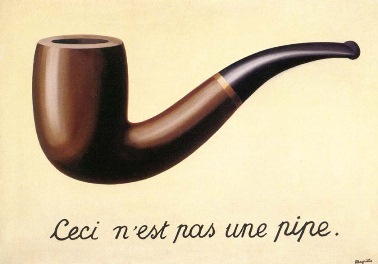
Image from wikipedia:Belgian surrealist René Magritte's famous painting, subtitled "This is not a pipe"

In The Map and the Territory, we looked at this thought-provoking painting, and we talked about Alfred Korzybski, who gave us this simple but profound quote: "the map is not the territory". He is responsible for a science he called General Semantics, which wikipedia sums up as follows:
Korzybski's work held a view that human beings are limited in what they know by (1) the structure of their nervous systems, and (2) the structure of their languages. Human beings cannot experience the world directly, but only through their "abstractions" (nonverbal impressions or "gleanings" derived from the nervous system, and verbal indicators expressed and derived from language). Sometimes our perceptions and our languages actually mislead us as to the "facts" with which we must deal. Our understanding of what is going on sometimes lacks similarity of structure with what is actually going on. He stressed training in awareness of abstracting, using techniques that he had derived from his study of mathematics and science. He called this awareness, this goal of his system, "consciousness of abstracting". His system included modifying the way we approach the world, e.g., with an attitude of "I don't know; let's see," to better discover or reflect its realities as shown by modern science. One of these techniques involved becoming inwardly and outwardly quiet, an experience that he called, "silence on the objective levels".
Korzybski's work has influenced a number of deep thinkers, including Robert Anton Wilson, who we'll get to shortly. It was Wilson who coined the term "the Jumping Jesus Phenomenon".

In Computers and Consciousness, we talked about the conundrums we are bound to encounter as computers become more and more powerful - if a computer is able to map and seamlessly re-create all of the mental processes of a human being, is that computer conscious? Here's the video for Computers and Consciousness:

A direct link to the above video is at http://www.youtube.com/watch?v=BRiYQuisqPM

As you're watching this video, you're seeing scenes from a movie which in YouTube has been called The Singularity is Near. But after further research I see that the scenes are actually from a 2006 three-part documentary series on the notion of transhumanism by Belgian visual artist and filmmaker Frank Theys, called TechnoCalyps. Here's what it says on his website:
The accelerating advances in genetics, brain research, artificial intelligence, bionics and nanotechnology seem to converge to one goal: to overcome human limits and create higher forms of intelligent life and to create transhuman life.

Frank Theys conducts his enquiry into the scientific, ethical and metaphysical dimensions of these technological developments. The film includes interviews by top scientists and thinkers on the subject worldwide, including Marvin Minsky, Ray Kurzweil, Hans Moravec, Terence McKenna, Bruce Sterling, Robert Anton Wilson, Margaret Wertheim, Rael, the Dalai Lama and many more.
This looks like it would be a great DVD set to own, but it appears the program is not available in a format that will play on North American players - too bad! Still the entire series is available on Google Video, so here's all 3 parts. Each of these clips is over 50 minutes long, so make sure you're comfortable!

Here's a direct link to the above video - Part One.


Here's a direct link to the above video - Part Two.


Here's a direct link to the above video - Part Three.

We've talked about the transhuman movement a few times now, in Suffering in the Multiverse and in Computers and Consciousness. And we've talked about the idea that our reality is accelerating in ways that seem entwined with our awareness in numerous entries, including Tens, Google and the Expanding Universe, Google and the Group Mind, The Stream, Evolution's Fast Lane and Boredom and Consciousness. The images I showed behind me in my video for Computers and Consciousness come from Part Two of Technocalyps, which after some shots of scientists working in clean room suits, shows a visualization of our history as a moving landscape - from fire, to agriculture, the wheel, and so on, we start with the innovations very far apart, but as we move through the landscape they become closer and closer together. Futurist/novelist Robert Anton Wilson appears and talks about this concept:
"The Jumping Jesus Phenomenon is my name for the acceleration of information throughout history. I first heard of that through Alfred Korzybski, a Polish mathematician who invented a scientific discipline called General Semantics. Korzybski noted that information was doubling faster and faster, every generation. And he said we've got to be prepared for this, we've got to train ourselves to be less dogmatic and more flexible so that we can deal with change. He took the year 1 A.D. as his basic unit to calculate how long it took for the information available to human beings to double, and it took 1500 years... which brought us up to the Renaissance. Leonardo Da Vinci was in his forties, and the Renaissance was at its height.

I decided to call this unit a "Jesus": so, in 1 A.D. we had "one Jesus", in 1500 we had "two Jesus". The next doubling only took 250 years, so already you can see the acceleration factor, and by 1750 we had "four Jesus". The next doubling took a hundred and fifty years and by 1900 we had "eight Jesus". The next doubling only took fifty years and by 1950 we had "sixteen Jesus". In 1960 in only ten years we had "thirty-two Jesus", by 1967 we had "sixty-four Jesus", and by 1973 we had "128 Jesus", and the latest estimate I've seen is by Dr. Jacques Vallee, a computer scientist who says that knowledge is doubling every year. But I heard that estimate, oh, five or six years ago. I saw something on the net recently, somebody estimated it's doubling about twice a year now."
How can we possibly deal with such an overwhelming deluge of new information? I've talked about the need for quieting our "narrator voice" in a number of previous blogs, including Logic vs. Intuition, Daily Parrying, Are Animals and Kids More Fifth-Dimensional, in my book, and in my song "Automatic". Korzybski's work seems to have an interesting connection to the idea that we do better when we can achieve "silence on the objective levels", and it seems clear that the goals of meditation and mindfulness training, as ways of dealing with the dizzying amount of change we are now experiencing, can be tied together into Korzybski's theories of General Semantics.

Quiet your mind, stop the needless loops, and enjoy the journey!

Rob Bryanton

Next: O is for Omniverse - New Book!


A direct link to the above video is at http://www.youtube.com/watch?v=AjR69ddBK78

Friday, June 5, 2009

Nassim Haramein


A direct link to the above video is at http://www.youtube.com/watch?v=4OZj1XAjcTY

We've talked in previous blogs about fractals, sacred geometry, water and its connection to life and inspiration, and how the "zero" and the "ten" in my way of visualizing the dimensions are really two complimentary ways of looking at the same thing: perceiving the underlying perfectly balanced symmetry state that our universe or any other springs from. One thing I've remarked upon before is that the "zero", as a point, represents the push towards the infinitely small, and the "ten" represents the push towards the infinitely large, but both are part of the same continuum (and are represented as such in the graphic created for this project - the zero and ten are on a line, and the other dimensions are "outside" of that line). Within my way of visualizing the dimensions, then, the zero and ten are of indeterminate size, and the other dimensions represent ways of slicing up infinity to get to more specific subsets of reality, including a universe such as our own.

A number of people have remarked to me that physicist Nassim Haramein has a Unified Field Theory which seems to connect in some interesting ways to the ideas I've been talking about. If you're in a hurry, start listening to the video below at about 7:45, because pretty well everything up to that point is preamble. At 7:45 he begins to talk about there being much more to our reality than what we see around us, and that he (like me) had an intuition about this at the age of seven which he became fascinated with.


A direct link to the above video is at http://www.youtube.com/watch?v=pPgII_4ciFU

By the end of this first clip, you can see him starting to describe the same way of visualizing spatial dimensions which I talk about in my original animation, and as I've remarked previously in entries like We Start With a Point, A Point Within the Omniverse, and Aren't There Really 11 Dimensions?, this is known as the point-line-plane postulate. In the following video, you'll see that he says the first and second dimension don't really exist, and then he says by that logic the third dimension doesn't exist, since it's made out of things that don't exist!


A direct link to the above video is at http://www.youtube.com/watch?v=-TV3a09vFYI

To solve this quandary, he goes back to the zero that we start from, the point of indeterminate size, and posits that the fractal nature of our reality tells us that everything is constructed from points, each point recursively/infinitely embedded within all other points, and therefore all points are connected to each other. He tells us that his theories are now being peer-reviewed at several American universities.

He points out that this idea may seem similar to the theory of the big bang, which says our universe sprang from a "dot" the size of Planck's length. But in Nassim's theory, all "dots" contain the potential for a universe, because they are all connected together. In the following video he shows clips from a couple of movies: the opening sequence of "Contact", and the ending of "Men in Black", both of which give us graphic ways of visualizing a universe that is embedded in other universes. I've remarked elsewhere that the "universe embedded in a rose in an abandoned parking lot" idea from Stephen King's Dark Tower series is another interesting fictional portrayal of this recursive/fractal idea.

A direct link to the above video is at http://www.youtube.com/watch?v=kRWeyCfCE1M

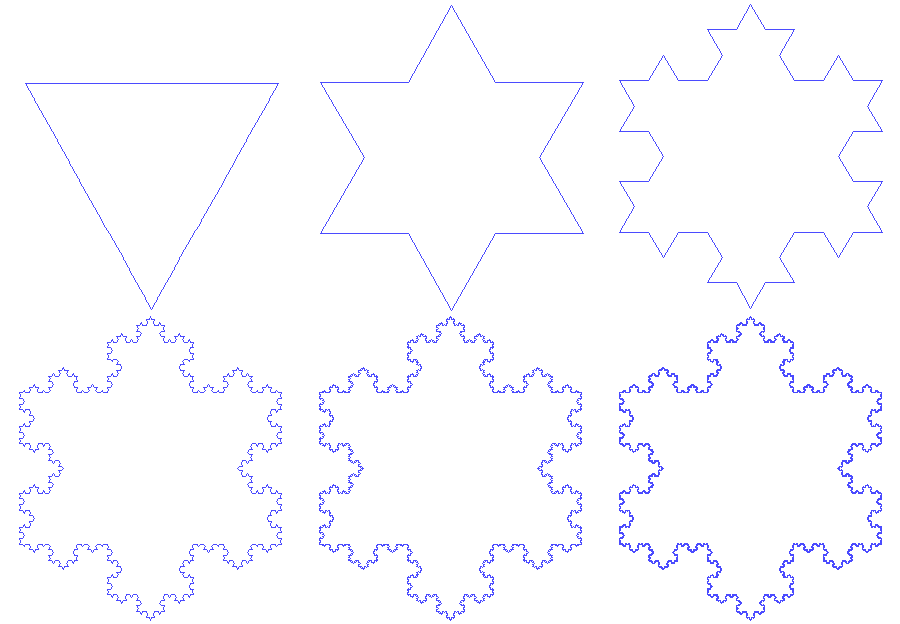
The universe is infinite. How do you fit infinity within a finite space? Fractals. In the above video he shows how this could possibly be imagined through infinite recursion, watch the video and you'll see what I mean. Or check out the following two animations from the wikipedia article on fractals: the object at the left is known as a Sierpinski Triangle, and to the right is a Koch Snowflake.

If you were to imagine drawing a circle on a piece of paper, then fitting either of these shapes within that circle, you would see a very similar idea to what he's talking about here. Although both of these animations only show the first ten steps or less, in both cases the process we are seeing could be repeated forever, as each new step proceeds down to a smaller scale than the one before. In the following video he continues this idea:

A direct link to the above video http://www.youtube.com/watch?v=s-RjjNgBDyk

.. and here's how he sums it up (I've edited him a bit here):

"Although I can place an infinite amount of triangles in a circle, I will never exceed the first boundary I made for myself. Never. I just showed you how infinity fits in a so-called finite space: because you can divide to infinity within a circle!

"What does that mean? Let me give an example for physics: we build faster and faster accelerators that cost billions of dollars, to get smaller and smaller. If we were to understand this principle of fractals, we would see very quickly that you can always keep dividing: so we would give up the search for some fundamental particle that's going to end the search. And we would start to understand that what we need to discover is the dynamic of the division, the dynamic of the quantization... rather than continuing to see how much further we can keep going down into infinity."
If you've followed him this far, you will now start to hear him say things about our connectedness, and our interface with reality that very strongly connects to the things I talk about regularly with my project. Here's one thing I want to make absolutely clear: Nassim is not promoting a worldview that comes from ten spatial dimensions, but he is promoting a very similar concept to what I portray as being the tenth dimension: an infinite "set of all possible states" that contains all possible expressions of matter and energy, all enfolded together into an underlying whole, a zero which is "full rather than empty" as Gevin Giorbran explained so well in Everything Forever. When you read blog entries like The Invariant Set, Imagining the Omniverse Addendum, Google and the Group Mind, Dreaming of Electric Sheep, and Why Do We Need More than 3 Dimensions?, you'll see fractals discussed from various approaches. The thing that we should all be clear about here is that fractals are often defined as having "non-integer" dimensions: and as you'll see if you read the wikipedia article on Hausdorff Dimensions, that Sierpinski fractal (which we looked at above) has a dimensionality of approximately 1.585. By the time we are imagining reality coming from ten dimensions but when those dimensions can contain any number of "fractional" dimensions, it really does seem like my description of the ten dimensions allows for us to include an infinite number of vectors within that set: as Nassim says, this is another way of thinking about how an infinite set could be contained within a so-called finite space.

The word "multiverse" has come to have multiple definitions. When someone uses that word, are they talking about the set of parallel universe outcomes for our own universe as described by Everett's Many Worlds Interpretation, or are they talking about the ten to the power of 500 universes with different initial conditions from our own universe which are predicted by string theory? Often, the definition of this word depends upon who you are talking to. Because my way of visualizing the dimensions provides a way to enfold and relate both of those concepts into a hierarchy, I have come to prefer to use the omniverse as the word that combines all of those possible states into one.

If you'd like to hear more from Nassim Haramein, please go to this youtube channel, iiisis2, where all forty-five videos that make up the presentation we're looking at here are posted.

Enjoy the journey!

Rob Bryanton

Next: Augmented Reality - 10thdim Music Videos

Wednesday, March 18, 2009

Where Are You?


A direct link to the above video is at http://www.youtube.com/watch?v=Befk-LZVOg0

Laughing and crying, you know, it's the same release
- Joni Mitchell, from her 1974 song "People's Parties"
As I mentioned two entries ago in The Comedian, I'm from the province of Saskatchewan, Canada, and am proud to have been working on the hit Canadian TV show Corner Gas for the past six years (Corner Gas is a smart comedy about people living in a fictional town in Saskatchewan). Artist/musician Joni Mitchell, quoted above, is also from Saskatchewan, and last blog entry we talked about the new scientific studies showing how learning to play music can rewire the brain towards having more empathy. Empathy has been a running theme for the last several entries, and we're continuing that discussion here.

When I typed the above lyrics into google one of the top hits that came up was this:
http://www.divinecaroline.com/article/22178/56973-healing-tonics--laughing-crying
This is an article written by Shari Covens which blends ancient mysticism with a modern viewpoint. She mentions the seven chakras, and as I've mentioned before seven also holds an important position within my way of visualizing the dimensions: my song Seven Levels is about that idea, and its opening verse includes a mention of chakras as one of the fascinating possible tie-ins to this concept.

Stay with me now, these threads really do all weave together in their own strange way. Joni Mitchell started her career in the 60's as a folk singer, and sometimes played at a folk club here in my home town called "The Fourth Dimension" (another very tiny tie-in to my project). Joni Mitchell released her first album in 1968. That same year, a psychedelic folk music band from Scotland called the Incredible String Band released a song called Douglas Traherne Harding.

Last month we also talked about John Thomas Bryant, creator of Astrotometry. Here's a lovely video John recorded of artist/musician Margaret Fabrizio, talking about Douglas Harding:

A direct link to the above video is at http://www.youtube.com/watch?gl=CA&hl=en&v=WzN76a8Ubls

Which leads us, finally, to the title of this blog entry: Where Are You?

There's a site called Perceiving Reality that asks the same question. If you have nine minutes, watch this thought-provoking video, which seems to be connected in various ways to the discussions we've been having here:

A direct link to the above video is at http://www.youtube.com/watch?v=0drT_L4G8w8

If you got to the end of the above video, you may have been as surprised as I was to see that it was about the teachings of the Kabbalah, a system of ancient mysticism I know little about, but which seems to have some very interesting connections to my way of visualizing reality - including, as others have pointed out to me, and as I showed in my blog entry Jake Kotze and Mystical Numbers, some fascinating parallels between the helix logo created for this project and the Kabbalistic Tree of Life.

Here's another video that connects to all this - Maxwell Igan talks about the "nothing that is behind your eyes" and how that ties into consciousness and empathy, vibrations and patterns, connectedness and love.

A direct link to the above video is at http://www.youtube.com/watch?gl=CA&hl=en&v=v9AH7JZGAp0

Understanding the ways that we are all connected has been a running theme with my project. I've talked a number of times lately about two of my blog entries from last fall which use Beatles lyrics to tie together modern physics and ancient wisdom - I Know You, You Know Me and You are Me and We are All Together seem to keep coming up in this conversation. In the latter of those two entries, I described a highly unusual dream I'd had a few days before: I'm not in the habit of recounting dreams in this blog, but this one was quite different from any others. Imagine my surprise, then, when I came upon the Maxwell Igan clip above, which would have been released just a week or so after I had my dream, and this blog entry from comedian Joe Rogan, in which he talks about having had the same insight this past summer:

http://blog.joerogan.net/archives/232

To be clear, I'm not suggesting that "we are all one" is some new idea that has just arisen within the last year - I discuss the same idea in my book, and of course various threads of spiritual and mystical thought have said the same thing for millennia. What I'm remarking upon here is only my own personal journey, where I had an insight, then was surprised to find other people expressing the same ideas in short order, and that experience is part of the pattern-matching process that all of us go through as we recognize the connections between the memes all around us.

In the above blog Joe describes how high he was when he came up with his insight, and of course the ideas I'm talking about from those Beatles lyrics are also connected to their experiments with psychedelics. The fact that I came up with the same idea without drugs (as I've said many times now, I have no personal experience with psychedelics) is something I find very interesting: and as I just mentioned in The Comedian, I'm becoming more and more intrigued as I read Graham Hancock's book Supernatural about what that could mean. Is it possible that the visions seen while in various states of altered consciousness (which includes much more than just drug-induced states), as experienced by Shamans throughout mankind's existence, and continuing to be part of many very different people's experience up to today, might be more real than we've been led to suspect? Is it possible that shared thought patterns and new inspirations are giving us tangible glimpses into the memes, the patterns of information that exist outside of time and space? And as I've said many times in this blog, and also touched upon in my book: could meditation, trance, and other altered states be providing ways for us to glimpse other aspects of our reality which are just as real but hidden from view?

This position is easily ridiculed, I know. As I've discussed in entries like Daily Parrying and Ever Seen an Aura?, there has been a tradition, particularly within the scientific community of the past century, to dismiss anything that acknowledges the participation of our consciousness within the creation of the reality we are witnessing as being superstition and ignorance. But what are we to make of it when scientists start expressing related ideas about how all matter is connected together, about hidden dimensions that hold patterns that create our reality, about there being ways of viewing reality in which "time" has no meaning? Let me finish this blog with a famous quote from Albert Einstein:
A human being is part of the whole called by us universe, a part limited in time and space. We experience ourselves, our thoughts and feelings as something separate from the rest – a kind of optical delusion of consciousness. This delusion is a kind of prison for us, restricting us to our personal desires and to affection for a few persons nearest to us. Our task must be to free ourselves from the prison by widening our circle of compassion to embrace all living creatures and the whole of nature in its beauty... We shall require a substantially new manner of thinking if mankind is to survive.
- Albert Einstein
Was Albert smoking the same stuff as Joe? Probably not, and neither was I. But each of us, in our own way, are describing the same idea about how each of us is part of a larger whole.

Where are you
in all this? You're right at the very center of your own version of the universe. But you are connected to everyone else, and to everything else, in ways that are very important to remember: and as more and more people realize that, the world becomes a better place.

To finish, the song we mentioned above - our own universe is defined at the seventh dimension, a fact that has mystical, spiritual and scientific connections. The song is called "Seven Levels".

A direct link to the above video is at http://www.youtube.com/watch?v=b7r2NJop0cs

Enjoy the journey!

Rob Bryanton

P.S. - After writing this entry about memes and hidden patterns that connect us together, I came upon an entry posted last week in C. Om's What Is Really Good? blog which adds some thought-provoking tangents to this question - click here to read "Ever Seen Yourself?".

Next: More on Augmented Reality

Wednesday, September 24, 2008

The Placebo Effect


A direct link to the above video is at http://www.youtube.com/watch?v=Ve3xtIKiyRs

placebo :
1 a: a usually pharmacologically inert preparation prescribed more for the mental relief of the patient than for its actual effect on a disorder b: an inert or innocuous substance used especially in controlled experiments testing the efficacy of another substance (as a drug)
2
: something tending to soothe
- from the Mirriam-Webster Online Dictionary
In entries like Changing Your Genes and Changing Your Genes Part 2, we've talked about the surprising new scientific research that indicates people can change which genes are expressed purely through changes in lifestyle. The idea that each of us are dealt a certain genetic hand of cards at conception, then, which destines us to a particular future of good or poor health depending upon our genetic luck of the draw, is an old idea with much less weight than it used to have. In Crossing Your Arms to Change Your Trajectory, we talked about a different scientific study showing that something as simple as changing your physical stance will have an effect on the decisions you make and the paths you choose.

In my book, the chapter "How Much Control Do We Have" wrestled with a related set of ideas, and as we just discussed in my blog entry We're Already Dead (But That's Okay), even if we do have a surprising amount of control there are still a combination of factors that cause us to have one life or another from out of the bush-like branching structure of possible futures that extends out for each of us from our current "now". It's a balancing act, as we live out a life where each of us have free will, but are also affected by a certain amount of randomness and the actions that have come before.

There was an interesting article by Michael Brooks in the August 23rd issue of New Scientist Magazine about "The Power of the Placebo Effect", which discusses research being conducted by doctors Luana Colloca and Fabrizio Benedetti of the University of Turin in Italy. Here are some excerpts from that article:
...Benedetti and others are now claiming that the true nature of placebo is far more complex. The placebo effect, it turns out, can lead us on a merry dance. Drug trials, Benedetti says, are particularly problematic. "An ineffective drug can be better than a placebo in a standard trial," says Benedetti.

The opposite can also be true, as Ted Kaptchuk of Harvard Medical School in Boston points out. "Often, an active drug is not better than placebo in a standard trial, even when we can be confident that the active drug does work," he says.

Some researchers are so taken aback by the results of their studies that they are calling for the very term "placebo" to be scrapped. Others suggest the latest findings undermine the very foundations of evidence-based medicine. "Placebo is ruining the credibility of medicine," Benedetti says."The findings threaten the very credibility of modern medicine"

How did it come to this? After all, the foundation of evidence-based medicine, the clinical trial, is meant to rule out the placebo effect.

If you're testing a drug such as a new painkiller, it's supposed to work like this. First, you recruit the test subjects. Then you randomly assign each person to one of two groups to ensure both groups are alike. One group gets the painkiller, the other gets a dummy treatment. Then, you might think, all you have to do is compare the two groups.

It's not that simple, though, because this is where the placebo problem kicks in. If people getting an experimental painkiller expect it to work, it will work to some extent... If the control group know they're getting a dummy pill whereas the other group know they're getting the "real" drug, the experimental painkiller might appear to work better than the dummy when in fact the difference between the groups is entirely due to the placebo effect.

So it's crucial not to tell the subjects what they are getting. Those running the trial should not know either, so they cannot give anything away, creating the gold standard of clinical trials, the double-blind randomised controlled trial. This does not eliminate the placebo effect, but should make it equal in both groups. According to conventional wisdom, in a double-blind trial any "extra" effect in the group given the real drug must be entirely down to the drug's physical effect.
Later on in the article, it talks about a study involving a specific painkiller called a CCK-antagonist" that was known to be effective. The article continues:
...Now comes the mind-boggling part. When Benedetti gave the same drug to volunteers without telling them what he was doing, it had no effect. "If it were a real painkiller, we should expect no difference compared to the routine overt administration," he says. "What we found is that the covert CCK-antagonist was completely ineffective in relieving pain."

If you don't know you have been given the painkiller, it has no effect."
Please click on this link to read this whole article, there are many more surprises revealed. One of the most important things, the article tells us, in determining the effectiveness of a treatment is whether the patient has confidence in their treatment. Homeopathic remedies and other oft-ridiculed alternative medicines, then, take on a different light in the face of this evidence, as do the suppressed information that psychedelics or meditation may actually be helping people to live happier, healthier lives: and all of this points to the idea that we, as observers of a quantum wave function representing our possible future selves, may have much more control over our own well-being than we've been led to believe.

This is the current poll question, then, here at the tenth dimension blog, and it is based upon the New Scientist article we've been looking at today:
The placebo effect is real - people who think they are getting medicine are more likely to get better. This demonstrates that we have more control over our health than we realize.
Do you agree or disagree?

Clearly, the power of the placebo effect does not say modern medicine is bunk. What it does say, though, is that a doctor or caregiver who has the confidence and trust of their patients is going to be more successful in helping those people find their way to good health, and that's an inspiring scientifically proven fact.

Finally... for fun, here's one of the 26 songs attached to this project, and it's about the conundrum of how much control we have as we move one planck frame after another through the bush-like branching structure of possible futures. It's called "Making It Up As I Go". A direct link to this video is at http://www.youtube.com/watch?v=YpkehQ97ltA


Enjoy the journey,

Rob Bryanton

Related Entries
Song 15 of 26 - What Was Done Today
David Jay Brown and Psychedelics
Crossed Wires in the Brain
Your Fifth-Dimensional Self
The Fifth Dimension Isn't Magic

Next: Why Do We Need More Than 3 Dimensions?

Tuesday, May 6, 2008

Crossing Your Arms to Change Your Trajectory


A direct link to the above video is at http://www.youtube.com/watch?v=Lr5BKZPnHbc

There's a news story circulating in the last couple of days about a new study that indicates that people who fold their arms will, without even being aware of it, increase their perseverance and activate their unconscious desires to succeed. The researchers gave random selections of university students a set of problems, some of which were unsolvable. Before the study began, some of the students were instructed to sit with their arms folded, and researchers were surprised to see a strong correlation between this body stance and the number of people who kept trying to solve the unsolvable puzzles. The results of this study were published in the most recent issue of the European Journal of Social Psychology.

It's so simple: attitude affects outcome. As physical creatures, our physicality affects our interface with reality, our attitude. This is why simple techniques such as breathing exercises, meditations, guided visualization, regular physical activity, and even changes to physical stance like folding your arms can so easily affect a person's trajectory as they twist and turn in the fifth dimension. Here's a quote from chapter nine of my book:

Have you ever met someone who claimed they had been too busy to get a cold, so they continued working and stayed healthy? Perhaps that person also mentioned that after a month or two they took a break and suddenly the cold sent them to bed. What is the mechanism that could allow a body to avoid or at least stave off a virus for so long, while others nearby are immediately struck down with the same virus? Could this be an example of people finding a way to collapse a different quantum reality simply through their desire to do so?

Back in my blog entry Information Equals Reality, I worked through a simple visualization technique that involved nothing more complicated than sitting up straighter in your chair:
We can ... move ourselves to different trajectories within our probability space. Try this one: imagine a warm ball of energy starting at the base of your spine, gradually working its way up your back, making you sit up straighter, creating a radiant glow out through your shoulders and the top of your head that opens your eyes wider and makes you feel more alert. Do you feel it? It really is that simple to change your energy, because it's all just information. Think about this: just standing up straighter, you might say, improves your body mass index (my son the med student will say "not really", but he's the one who said this to me as a joke, and I still think it's a useful idea)!

My song Turquoise and White is also about using attitude and physicality to change our trajectory. In a blog entry about that song, I say this:
Why should meditation cause things to change about our physical reality? Why should ritualized physical activities like Tai Chi cause people to think more clearly, become more "centered"? Why should changing our physical stance, or breathing more deeply, or even just making a conscious effort to smile more be able to change so much about the mind? These ideas are all part of the larger concepts we've been exploring here: what does it mean to be a quantum observer, occupying a physical body, navigating through the information that is our reality?

In my last blog, I talked about the idea of us as flatlanders in the fifth dimension, unable to see the whole picture because there is no way for us to be lifted above our fifth dimensional plane to see the whole picture of state space for our universe. But just because we can't see the extra dimensions doesn't mean that we can't use simple tricks that affect our physicality and our mental attitude to harvest the potentials that exist within the information that becomes our reality: and that's a powerful idea. But it's also a double-edged sword, because depression, disease, and other negative loops can affect our fifth-dimensional trajectory just as easily. Next blog: Everyone Has a Story.

Enjoy the journey,

Rob Bryanton

Some related followup entries:
Changing Your Genes
Changing Your Genes Part 2
The Placebo Effect
Magnets and Souls
Crossed Wires in the Brain
David Jay Brown and Psychedelics

Other entries about how attitude affects outcome:
Song 3 of 26 - Burn the Candle Brightly
Boredom and Consciousness Part Two
Everything Fits Together in the Zero at the End
Waveforms in the Ten Dimensions
Remembering the Future

Other entries about how physicality affects our fifth dimensional trajectory:
Music and the Dance of Creativity
Connections
Constructive Interference
Living In the Fifth Dimension
Seeing Eye to Eye

Thursday, May 1, 2008

Your Fifth-Dimensional Self


A direct link to the above video is at http://www.youtube.com/watch?v=aG651x1xUz4

Quotes from a couple of emails received in the last few days:

Your book opened a lot of "thinking" doors for me. It really expanded my horizons... - David Levy, Florida, USA
When I stumbled (is there really such a thing?) across it via the internet I had a sensation tantamount to a quelling of unease and an allaying of confusion. After devouring the book I have had a feeling of "belonging" in the scheme of things. - Richard Ruff, McMahons Creek, Australia
And a quote from a new review of the book at Amazon.com:
This book is excellent for a reader looking to expand their horizon on something more than what is in front of them. It gives you an opportunity to think of all the possibilities you have in life. - C. Leonard

Just a few blogs ago we talked about the "Flipbook Universe" analogy. While digital physics shows how that imagery works for the really big picture of how one universe comes to be selected from out of the omniverse of all possible multiverses, it also works at a very personal level.

Your Fifth-Dimensional Self
Time is a direction in the fourth spatial dimension, a line that is knit together by choosing one possible future out of the probabilities available from instant to instant in the fifth dimension. This means that there is already a version of you in the fifth dimension that from this moment forward has made the best of every bad situation, has made every choice they know in their hearts is the right one to make, and has lived the longest and happiest version of their life.

This also means that there is already a version of you in the fifth dimension that from this moment forward has made stupid decision after stupid decision, has destroyed their future, or has suffered from bad luck and the hurtful actions of others, and as a result has died very soon from now. That version of you, by virtue of hardly lasting at all, is the version which has almost no connection to the bush-like branching structure of future selves that we're imagining here: in other words, unless your death is truly imminent and unavoidable, in the fifth dimension that version is only a tiny subset of your possible future selves from this moment forward.

Let's talk about that first version of you some more. From the moment you were conceived, there was already that one happiest, longest-living version of you, extending out in a specific spime, or as we say in the tenth dimension animation, a specific "long undulating snake" representing a particular version of your timeline viewed from the fourth dimension. That idealized target will change over the course of a person's life, and all but the purest-living and luckiest of us will already have a best-available-future-path that is not as long-lived as the one that was available back when our life started: this is not the point of our discussion. Rather, the point is that there is always a future path available from any person's "now" that will represent the optimum set of choices they could possibly make from this moment onwards.

Many Worlds, Many "You"s
In the Imagining the Tenth Dimension project, we have spent a great deal of time talking about Everett's Many Worlds Interpretation, spacetime trees and quantum probability spaces, but we have also talked about the "beautiful blossoming potential of a newborn child" and the "angels of possibility that swirl around a toddler's head" (phrases from my book): all of these discussions keep taking us back to the idea that genes, memes, and spimes are all just patterns in spacetime, and shadows of higher dimensional forms.

Meditation
In a previous blog entry about my song "Turquoise and White", we talked about the possibility that meditation allows people to connect across time and space to that optimized version of themselves. EEG studies of persons in a meditative state show suppressed activity in the parietal lobe, the part of the brain that people use to anchor themselves in time and space: this interesting connection is also discussed in previous blog entries and in my book.

How Much Control Do We Have?
Does this idea of a constantly adjusting "best" version of each of us for our available future paths offer hope to someone trapped in addiction or other negative behavior loops? Of course it does. Does this mean a starving child in Africa will become rich and powerful if only they make the right decisions? Sadly, in terms of probability, the answer is most likely to be "no", but we all are attracted to the occasional story of someone who has overcome seemingly insurmountable odds: and that's true whether we're talking about achievements through hard work and determination, or lucky lottery winners, or the indomitable spirit of a person who has made the best of a difficult situation.

As you create your one fourth-dimensional path, twisting and turning one planck length at a time in the probability space of the fifth dimension, there is a best possible you that you could be headed towards right now.

How's it going?

Enjoy the journey,

Rob Bryanton

Other blogs that relate to this:
Infinity and Impulse Control
Your Sixth-Dimensional Self
Tenth Dimension Polls Archive 7
Hypercubes and Plato's Cave
Song 24 of 26 - See No Future
Song 15 of 26 - What Was Done Today
Song 10 of 26 - Addictive Personality

Wednesday, March 26, 2008

Tenth Dimension Polls Archive 8

Poll #8 - Have you ever had an experience where you thought you might have glimpsed a different dimension (through meditation, hallucinogens, dance, intuition, etc)?
(poll ended Feb 18 08)
80% said yes, the rest said no. My song "From the Corner of My Eye" is about this very idea. This is one of the central ideas to this project - if we really are experiencing one timeline out of many, observing a quantum wavefunction which exists at both the quantum and macro level (and Everett preferred to say that we are "observing" rather than "collapsing" the wavefunction because the other possible states continue to exist as potential), then might there be subtle visual or sensory hints that tell us our brain/consciousness is participating in that process? Admittedly, this is one of the more metaphysical concepts, but I was pleased to see how many visitors to this blog were willing to consider this as a possibility. This would also tie to the previous poll question - is it possible to sense the future, and could that be because the possible future outcomes available from our current "now" already exist as potential probabilistic branches?

Next: Poll 9 - Do you believe the phrase "time is an illusion"?

Sunday, December 30, 2007

FAQ 10 - Is this about Kabbalah, chakras, meditation, hallucinogens?

(Click here for the complete Imagining the Tenth Dimension FAQ list)

10. Is this project about Kabbalah, chakras, meditation, hallucinogens, etc.?

Where Are You?
Jake Kotze and Mystical Numbers
David Jay Brown and Psychedelics
The Shaman
Modern Shamans
You are Me and We are All Together
Nassim Haramein
Jumping Jesus
Placebos and Nocebos
Song 16 of 26 - Turquoise and White (a song about meditation and positive visualizations)
Song 2 of 26 - Seven Levels (a song about the interesting connections to the number seven)

This was one of the surprising outcomes of this project for me: I'm no expert on these ideas, but a number of visitors to the tenth dimension forum and my channel on youtube have written in to say they see strong connections between some of the items on the list above and my way of visualizing reality. For a project that is trying to find a central meeting point between science and philosophy, physics and spirituality, this may not seem like a surprising outcome, but the breadth of the different belief systems that people have said they see connections to is a thrill. Here are some blog entries about this:

Vibrations
Tuning Into Reality
Crossing Your Arms to Change Your Trajectory
Boredom and Consciousness Part Three

You might also be interested in the "Altered States" area of the tenth dimension forum. And Tom Huston's article about this project in What Is Enlightenment magazine also touches upon these ideas, you can view a pdf of that article by clicking here.

Thursday, December 13, 2007

Boredom and Consciousness Part Three


A link to this video can be found at http://www.youtube.com/watch?v=txe4psJ6pVw


A link to this video can be found at http://www.youtube.com/watch?v=99oMQvccar0

In Boredom and Consciousness Part Two we talked about how boredom is very much a "conscious" part of our minds. If you are driving a car properly, you are performing a constant series of checks completely automatically: your conscious and subconscious minds are working as one. The brain is entirely capable of taking you from one side of the city to the other without your "narrator voice" interfering with what you're doing. But what if that narrator voice, instead, had been telling you how boring the drive was? You would be much more likely to have had an accident through being inattentive to all of the possible danger signs that our subconscious minds deal with constantly as we drive. Even something as simple and uncomplicated as falling asleep is almost impossible to do if you can't find a way to quiet that darn narrator voice of consciousness, as anyone who has tried to find sleep when they are upset or excited knows only too well.

Do you like to garden? Some people can't stand it because it's so boring. Other people love simple repetitive activities like these because it gives them peace... in other words, gardening can be a form of meditation. And meditation, of course, is actually not that far away from boredom: because meditation is an activity that encourages us to move through and beyond our line of time with an integrated mind, quieting that nagging narrator voice that says "this is boring" and moving into the state that Julian Jaynes tells us we used to always exist within.

Here's what I say in my book about meditation:

Meditation is a particularly interesting example of how people can use the power of the mind to change their health and circumstances. Researchers analyzing the EEGs of persons in a meditative state have seen that the parietal lobe, which processes incoming data to give a person the sense of their location in time and space, becomes much less active during meditation. If the parietal lobe would be what anchors us in the first-through-fourth dimension (time and space), then, could suppressing that part of the brain be what opens the person who is meditating up to the healing paths available to them in higher dimensions?

This same Scientific American "Mind" article on boredom we were discussing in part two also talks about the rising popularity of "mindfulness" training in education, medical, and office settings, which is a form of meditation that helps people to become more in tune with the wonder of their day-to-day lives. Elsewhere in the issue is a review of a book by Jeff Warren called "The Head Trip": Jeff describes consciousness as a wheel that can be broken into twelve states from highly alert to deeply asleep. I was interested to see that what started him down the path of writing this book was exactly what we're talking about here: he was working a potentially boring job as a tree planter, and became fascinated with how his perception of time seemed completely different while doing this job. While some people would look at a menial and repetitive job such as this and find their day agonizingly slow, he found that time passed by almost without him noticing. In other words, one person's boring is another person's meditative state, or even another person's novelty.

When people who have watched my 11 minute animation or read my book say that it's "mind-blowing", my fervent wish is that I have helped to renew and expand their sense of wonder about this amazing universe we live in. There are a great many self-help books and breathing exercises and visualization techniques out there that people can use to change their way of perceiving the world. Imagining the timeless fabric that our universe and all other universes spring from is another: that's why I describe this project on the back of the book as a "mind-expanding exercise that could change the way you view this incredible universe in which we live".

In part one of this entry we talked about the quantum physics idea that it's actually possible for consciousness to change the past: an idea that hadn't occurred to me, perhaps not surprisingly since I have spent so much time thinking instead about how this way of imagining reality expands out what our possibilities from this moment forward might be. But even if the idea had occurred to me first, I suspect I would have just dismissed it as being too "out there" even for me. However, with esteemed physicists like John Wheeler pointing the way, and the research of physicists such as Rosenblum, Kuttner, Krauss and Dent (all of whom are mentioned in that previous blog entry), this idea takes on interesting resonances when we think about meditation and the integrated bicameral mind as being the mental processes where we stop being bored, and start freeing our conscious minds from our linear 4D succession of frames we call "time".

This week's poll question is about 2012, where do you stand? Could those predictions of a coming global transition be tied to McKenna's Novelty Theory (also known as Timewave Zero), or Kurzweil's approaching Singularity, or the many other impending predictions being pointed to by prophecy and ancient wisdom? Our minds, as pattern recognizing machines, have ways of connecting across the information of time and space. Our bodies, built from chemical processes that obey the laws of entropy, can only move in one direction in time, but if it really is possible for consciousness to "tune" the universe, as John Wheeler suggested, then we would have proof that our consciousness can freely move in any direction, and at any "angle" we choose. Thinking of an accelerating shift, where everyone's consciousness tilts at an ever more extreme angle to our 3D space to eventually encompass all of time, allows us to imagine the potential for our world to enter a timeless mindset. The idea that this possibility appears to be approaching at an increasingly accelerated pace is also one of the ramifications of this that is getting more and more people excited around the world. Are you interested in what happens next? I know I am!

Enjoy the journey,

Rob Bryanton

Tenth Dimension Vlog playlist